
Morris Case Information vs Documents
Think of a Morris County court docket as a timeline. Through the Kansas Judicial Branch Case Search, you can pull public case information and an events index. That index covers case number, case type, parties, counsel, judge, hearings, and recorded events. But an index line can report that a motion or journal entry was filed. The paper itself stays out of view.
The court file is different. It holds the pleadings, orders, notices, and other filed material behind those docket lines. The local Court Dockets PDF is narrower still. It works as a reference calendar for settings. Ask for "events history" and you get the chronology; ask for a "filed order dated..." and you get a document. Requesting a complete public file can mean more review, more pages, and more cost.
- Events index
- The electronic list of public case events.
- File-stamped copy
- A copy showing the clerk's filing mark.
- Certified copy
- A copy authenticated by the clerk.
- Transcript
- A written account prepared from a recorded proceeding.
How to Get Court Records
The Clerk of the District Court, Morris County keeps the District Court files. Do not confuse that office with the Morris County Clerk, which handles elections, commission minutes, and county administration. Send a court-file request to the wrong one and it sits while it gets routed again.
- Search Case Search and note the Morris County case number.
- List each item needed, such as an event history, petition, motion, order, judgment, exhibit, or full public file.
- Check online documents and the courthouse public terminal. Older converted records may appear only at the terminal.
- Ask the District Court Clerk by phone, at the counter, or in writing by mail. State the copy type and request an estimate.
- For a formal route, use the Kansas court KORA form, select County District Court, and name Morris County District Court.
Under the 8th Judicial District policy, you may request records by phone, in person, or in writing. The district states a three-business-day response period. That clock is not a promise a broad file or transcript will be done in three days.
Build a Morris Records Request
A narrow request lets the Morris County clerk find the case fast. It also helps the clerk quote the work. Give the case number. Without it, supply a party name, an approximate year, the case type, and a date range. Be precise about the item too. A complaint or petition is not an answer, motion, order, journal entry, judgment, proof of service, exhibit, transcript, or recording.
The Kansas court KORA form then asks for your contact details. It also wants a specific description, a delivery preference, a signature, a date, and certification tied to K.S.A. 45-230. Email, mail, pickup, and fax are all options. The custodian decides what can be supplied and estimates the cost.
Right custodian: Choose County District Court on the Kansas court form. Do not use the Morris County administrative form for a court case file.
Types of Court Records
The Morris County District Court Clerk keeps civil, criminal, domestic relations, limited civil, probate, small claims, traffic, fish and game, child-support, and marriage-license records. Adoption, juvenile, and care-and-treatment matters also pass through the office. Those labels do not guarantee public access.
- Case information and chronological event histories
- Petitions, complaints, answers, motions, and responses
- Orders, journal entries, judgments, and dispositions
- Public exhibits, attachments, and proofs of service
- Transcripts and recordings requested through a separate process
A federal case never lands in the Morris County District Court record set. Use PACER or federal clerk services for those files. Municipal ordinance files stay with the municipal court that heard them.
Older Morris Court Records
The 8th Judicial District joined Kansas's Odyssey-based eCourt system in the first rollout track of 2019. That conversion replaced FullCourt. It still matters. An older public Morris County document may sit at the courthouse kiosk. The remote portal might show only an index or no image at all.
Work a fallback chain: search Case Search, review the online documents, try the courthouse terminal, ask the clerk about converted or pre-Odyssey storage, then send a focused written request. A gap online is not proof that no file exists.
Note: the terminal can offer a broader public document layer than the remote portal. It does not open nonpublic records.
What a Court Record Contains
A Morris County court record often blends an index with filed documents. Read the event date and the document itself before drawing any conclusion. A hearing label marks a planned event, not its result.
| Case number | The court identifier used to locate the file. |
|---|---|
| Parties and counsel | Public participant roles, attorney, and pro se status. |
| Pleadings | Petitions, complaints, answers, motions, and responses. |
| Events index | The dated chronology of filings and hearings. |
| Orders and judgments | Filed rulings, journal entries, judgments, and disposition documents. |
| Exhibits | Attachments or evidence when filed and public. |
Check any dismissal entry against its order. A sealed marker tells you nothing about a party or case type, so never infer from it.
Morris Transcripts and Recordings
An electronic recording is not the Morris calendar PDF. The 8th District preserves electronic recordings. It relies on court transcriptionists, who turn all or part of a proceeding into written form. Both products travel a route separate from a docket or pleading copy. The official transcriptionist page names the Morris contact and the recording practice.
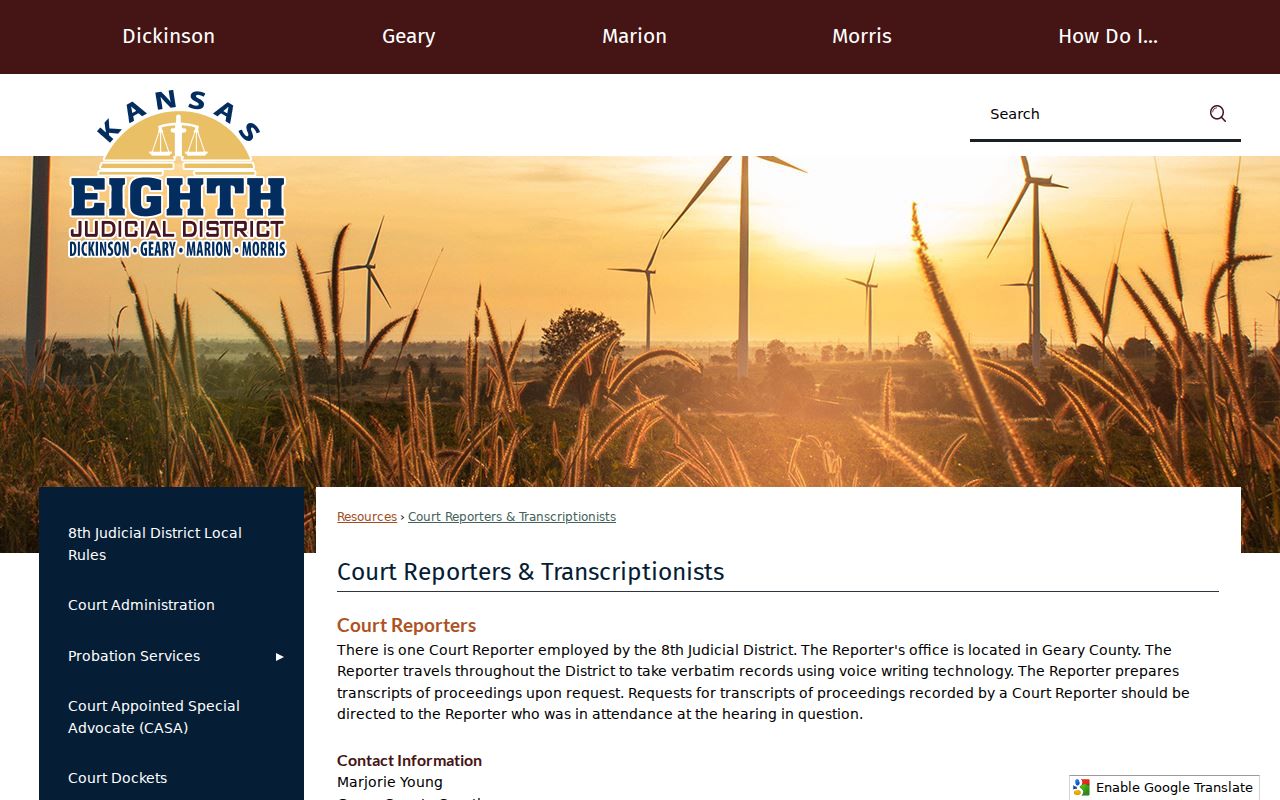
Court audio and transcript work sit apart from public docket access there. The Transcript Requests page links both the order form and the recording form.
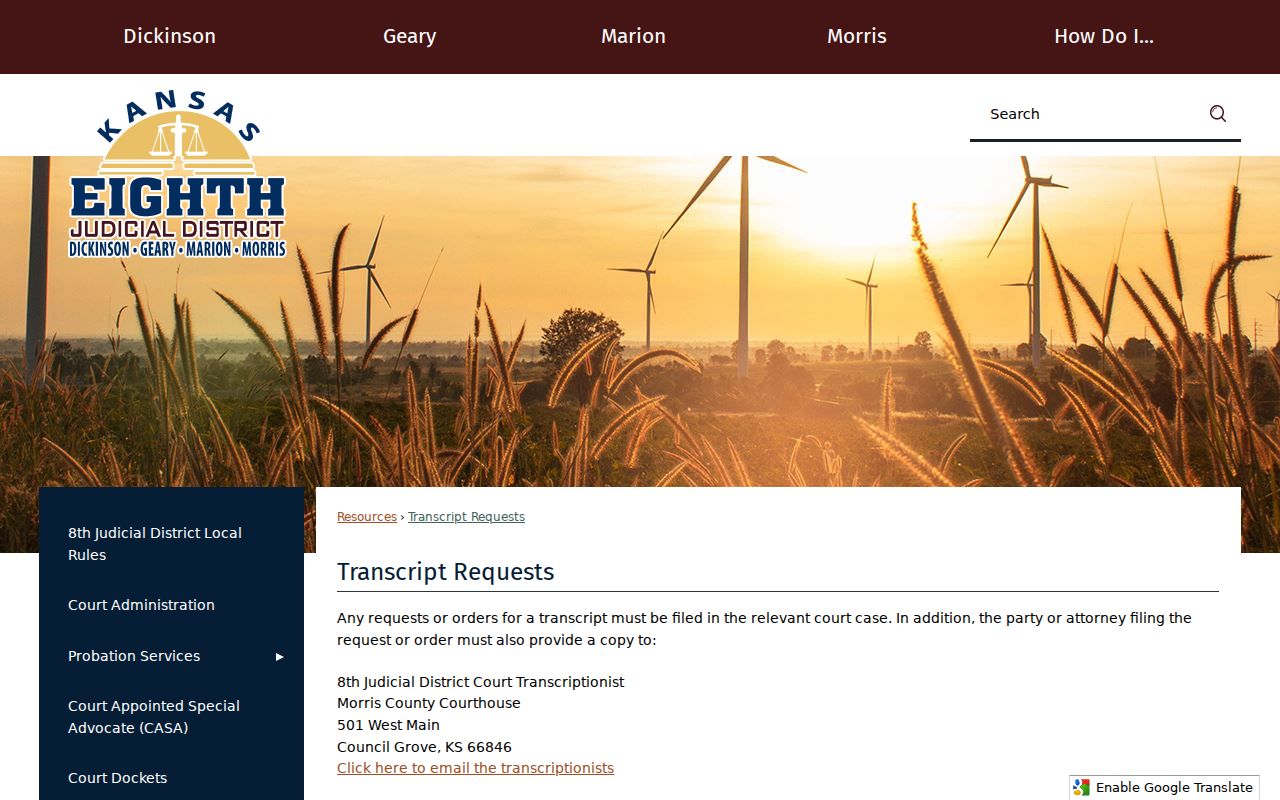
The order form asks for the hearing date and type, the scope, witness testimony, the payer, and where copies go. Pay the estimate before preparation begins, so request only the precise segment you need.
Certified Copies and Fees
Plain, file-stamped, and certified copies answer different needs. A plain copy works for review. A file-stamped copy shows the filing mark. Certification authenticates the copy through the clerk. The district publishes no complete certification schedule for non-attorneys. Ask the clerk for a total. The local copy policy lists these charges and the prepayment rules.
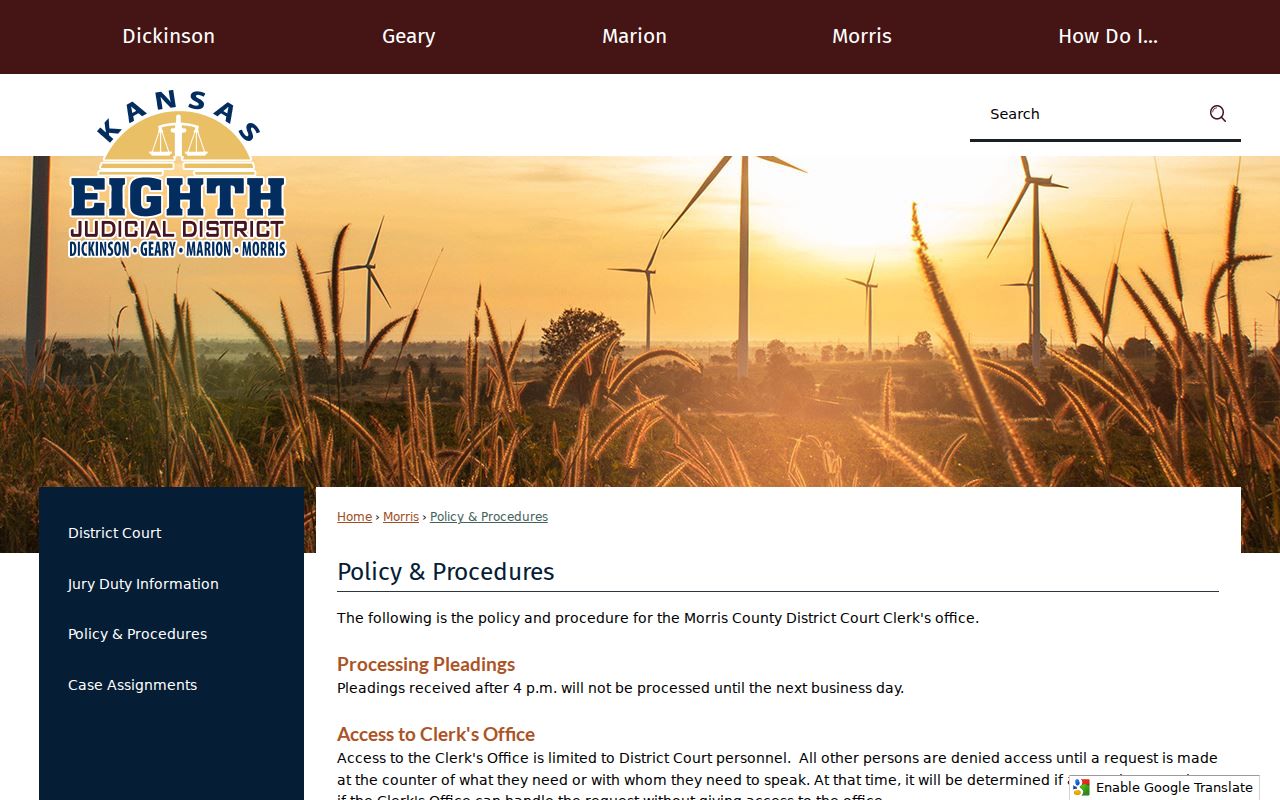
The source confirms page charges can be joined by research time and mail requirements.
| Item | Published amount or condition |
|---|---|
| Plain copies, 1 to 4 pages | $1.00 minimum |
| Plain copies, 5 pages | $1.25 |
| Plain copies, 6 pages | $1.50 |
| Additional pages | $0.25 each |
| Public-file research | $12 per hour minimum, plus copies; prepayment |
| Microfilm print | $0.25 per page |
| Mailed certified or file-stamped copy | Prepaid addressed envelope, one per case |
Morris Clerk Copy Desk
For a file copy, a docket history, or a hearing-date check, the Morris County District Court Clerk is the first stop. Phone, counter, and written mail requests are all documented channels. Electronic delivery may exist, but ask rather than assume.
Clerk of the District Court, Morris County
501 W Main Street, Suite 12
Council Grove, KS 66846
620-767-6838, Option 1
Ask for a cost estimate, the delivery choices, and the current certification terms. Then allow time for retrieval, review, redaction, and mailing.
Public Access and Sealed Records
Kansas eCourt Rule 22 opens public case records through the portal. It also opens them through the courthouse terminal. Rule 24 works the other side of the street. It lets the clerk redact identifying details while the file itself stays open. So a Morris County court docket can show a case yet hide certain fields. Filing a request does not unlock sealed, expunged, adoption, many juvenile and CINC, care-and-treatment, or other nonpublic material. Those records simply stay closed.
The Morris calendar marks a sealed setting with an asterisk instead of a public caption. That is all the public sees. A blank result can also mean a wrong court, a spelling slip, conversion limits, or a case that belongs to municipal or federal court.
Key Kansas access rules:
K.S.A. 45-218 sets inspection and response timing.
K.S.A. 45-219 permits lawful charges and advance payment.
K.S.A. 45-221 recognizes exemptions that the Kansas Open Records Act does not override.